For dealer principals, GMs, and F&I directors
Theft recovery with the install taken out of it.
BluSignal is a label, not a device. Scan it, scan the VIN, place it in the vehicle. No wiring, no OBD port, no technician, no service appointment, and it stays dormant until a theft is reported and verified.
Would it be ridiculous to see how this runs at your store before anybody asks you to sign something?
Send me the store math Call AAPSeven fields. No rep visit. We will not sell or share your information.
Twenty six seconds, sound on
The technology, in the maker's own words.
TRI-PAC's product film, cut to the part that explains how the label works and when it wakes up. We stopped it where their sales pitch starts.

Footage and narration are TRI-PAC's, used unedited. Recovery assistance shown is provided through RapidTrace® integration. The scenes are illustrations, not records of actual recoveries, and some were produced with generative video tools.
Before anything else
You have already said no to three of these.
So it is worth saying the hard parts first, before we ask you for anything.
- Another box your techs have to install, and a comeback when one goes wrong.
- One more line your F&I manager has to defend on a menu that is already under a microscope.
- Hardware you bought sitting in a drawer on a car that already wholesaled.
- And a vendor who will not tell you what it costs until you sit through a demo.
Three of those are gone because there is nothing to install. The fourth one is on us, and we will get to it.

What actually changed
The theft recovery device that is not a device.
Most of the cost in this category traces back to one engineering requirement. The device needed power.
To stay alive it had to reach the vehicle's electrical system or the OBD port. Everything downstream of that is the bill you already know. Technician time, a panel off and back on, hardware carried in stock, and a unit stranded on a car you already wholesaled.
Reelables describes its product as a thin film wireless smart label with a coated battery, flexible enough to be printed on an off the shelf barcode printer. The power source is fabricated onto the film alongside the wireless circuit.
The install was never about the install. It was about the battery.
Take the power requirement away and there is nothing left to install. On August 18, 2026, Reelables named TRI-PAC its Preferred U.S. Automotive Channel Distribution Partner for that technology. TRI-PAC has been administering protection products since 2001 and is the administrator behind IdentiCar.
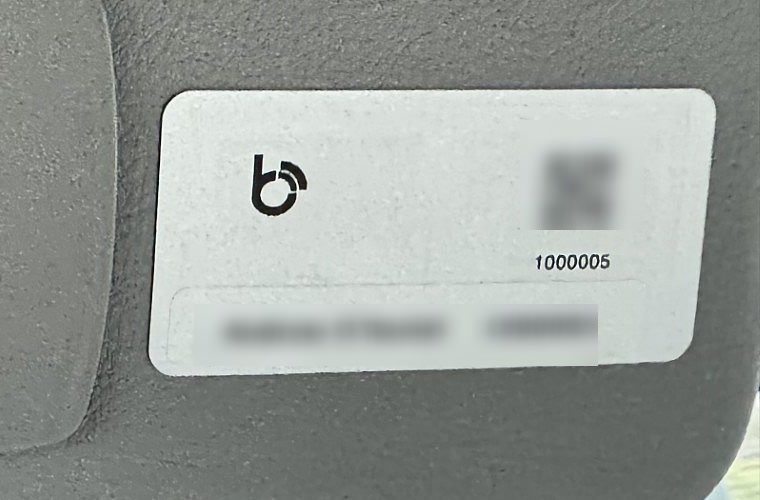
Above, the label as rendered by the manufacturer. Below, an enrolled label photographed on a vehicle. The QR code and registered name have been obscured. Placement suggestions are included with the startup kit.
Interactive demonstration
Dormant until a theft is verified.
The last generation of these products was built when always on sounded like a feature. It does not sound like a feature anymore.
Nothing is happening right now. That is the product working.
BluSignal is designed to stay dormant until a theft is reported and verified. It is not sold or intended as a live tracking, fleet monitoring, or repossession tool, and there is no dealer or consumer portal to look up where a vehicle is.
Theft reported and verified. The label is placed into Theft Mode.
Only now does anything happen. The label is alerted, and law enforcement is notified of the vehicle’s location through RapidTrace® integration.
- 01The customer reports the theft
- 02The theft is verified
- 03The label is placed into Theft Mode
- 04RapidTrace® integration alerts law enforcement
- 05The vehicle’s location is provided to assist recovery
How it works: the label carries a wireless circuit that communicates over Bluetooth gateways and supporting connectivity across terrestrial receiver networks. Recovery outcomes depend on law enforcement and on network availability in the area, and are not guaranteed. Data collection, retention and law enforcement cooperation are governed by TRI-PAC and its technology partners. Ask us for their written data practices statement.
How it goes on
Three steps. None of them involve a technician.
Whoever is already walking out to that car can do this. Delivery coordinator, porter, F&I manager, lot attendant.
Scan the device
Straight from the startup kit.
Scan the VIN
The label is paired to that vehicle.
Place it out of sight
Door jamb pocket or visor. It goes on plastic, not metal.
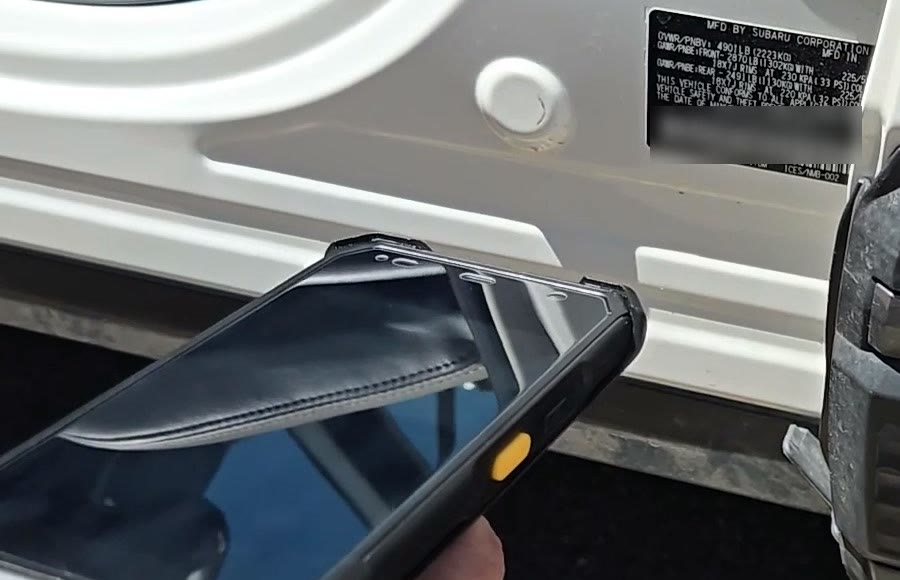
No wiring. No OBD port. No panel comes off. No service appointment. No hardware in a drawer waiting on a car that already sold.
The invoice you already have
The last one cost more than the price said it did.
What a recovery product actually costs your store, past the per unit number. Hardwired and OBD systems behave differently, so they are shown separately.
| What it costs you | Hardwired | OBD | BluSignal |
|---|---|---|---|
| Technician labor per install | Typically yes | Usually none | None |
| Bay time you cannot bill | Typically yes | Minimal | None |
| Hardware carried in stock | Yes | Yes | Label stock |
| OEM wiring interruption | Possible | No | No |
| De install on a wholesaled unit | Typically yes | Simple | Not applicable |
| Consumer subscription | Often | Often | Not required |
| Time added at delivery | Minutes | Minutes | Seconds |
| Can be located on demand, any time | Yes | Yes | No, by design |
Characterizations of hardwired and OBD systems are general to those architectures and vary by manufacturer and program.
We are not telling you the last one was a bad product. We are telling you it had a second price, and it was not on the invoice.
The number that is actually capped
The ceiling was never objection handling. It was capacity.
A hardwired product only reaches as many cars as your shop has time to touch. That is your real penetration number, and it is a service number wearing an F&I jersey.
The gap is cash deals, weekend and after hours deliveries, off site deliveries, second and third family vehicles, and every unit that sold before the shop had an opening.
Total units out the door.
Not what F&I presented. What the shop actually got done.
Copies you are not getting today, for reasons that have nothing to do with selling.
Those are example numbers for a 180 car store. Change any of them to yours and everything below follows.
At $ gross per copy, that gap is worth ___ a month. Call it ___ a year.
That gross number is a placeholder and it is yours to change. Type your own over it. We will build the real one against your rate card and your actual deliveries, whether you are buying or not.
We are not going to make up your profit number. The arithmetic above is yours and it runs on whatever you type into it. Send your volume and we will build the real version against your cost, your retail range and your actual deliveries, whether you are buying or not. The rate structure is set. Dealer cost is not going on a public page, because the store down the road reads this page too. Send your volume and the rate card comes back by email, with no meeting attached to it.
Program benefits
What the contract provides.
Theft recovery benefit if the vehicle is stolen and not recovered. Eligibility requirements apply.
Theft recovery benefit if the vehicle is stolen and not recovered. Eligibility requirements apply.
The contract may reimburse toward storage and impound costs.
Read those two together, because they cover both sides of the worst night of your customer’s year. If the vehicle is recovered they keep the car, which is the outcome everyone actually wants, and the contract may reimburse toward storage and impound on top of it. If it is not recovered, the contract pays the theft recovery benefit. Both outcomes have something in them for the customer, and that is a straightforward thing for your desk to say out loud.
Benefit amounts, eligibility, terms, exclusions and availability vary by contract and by state, and are governed solely by the contract issued to the vehicle owner. BluSignal is an optional product. It is not required to obtain financing and is not required to purchase or lease a vehicle. This program is not available in all states.
Regulatory context
Every add on is going to have to justify itself.
The direction of travel across the add on space is the same everywhere. Disclose plainly that a product is optional, and be able to show the purchaser got something for the money.
That is a documentation question, and a contract with a written benefit schedule is easier to document than a piece of hardware. Whether that satisfies any particular rule for any particular deal is a question for your compliance counsel.
California SB 766 is operative October 1, 2026.
California is the nearest dated example. Among other requirements, it obligates dealers to disclose clearly and conspicuously that an add on is optional, and makes it a violation to charge for an add on product the purchaser would not benefit from. We are not opining on how that applies to you, and we are not opining on the FTC CARS Rule either. What we will do is hand your compliance officer the contract, the benefit schedule and the program file so they can make that call themselves.
The rest of it
What you are still thinking.
Can a label really do what a hardwired unit does?
It does something different, and that is the honest answer. A hardwired unit is powered by the vehicle and built to be queried any time. This is a self powered label that stays dormant until a theft is verified, then works through RapidTrace® integration and law enforcement on locating the vehicle. If what you want is a system you can log into and watch a customer drive around, this is not that, on purpose.
What happens the night a customer’s car is actually stolen?
The customer reports it, the theft is confirmed, and the label is placed into Theft Mode. From there the label is alerted and its location goes to law enforcement through RapidTrace® integration. The entire design points at one outcome, which is the car coming home instead of disappearing into a container.
Your store’s part in that is deliberately small. You are not the claims department and you do not run the activation. What you get from us is the one page your desk needs for the customer who calls the store first, because they will call the store first, and we would rather your people sound like they run this program than like they are hunting for a phone number.
We are confirming the exact activation and claims steps with TRI-PAC in writing, so your desk has their words rather than ours.
How long does the label last?
TRI-PAC quotes a one year service life on the label, and builds the three year program around that rather than around a hope. The three year term includes a replacement label. Their platform reads the power level on an enrolled label, and the replacement ships to the customer when it starts to run down.
We are confirming the replacement mechanics with TRI-PAC in writing, so your desk can state it exactly rather than approximately.
Where does it actually go in the car?
On plastic, not metal. Most stores use the door jamb pocket or the visor. It is a flat two by four inch label with an adhesive back, so it goes out of sight, it goes on in seconds, and it does not sit anywhere the customer has to look at it. Placement guidance comes with the startup kit.
What stops a thief from finding it and throwing it out?
Less than you would think, and less than with the unit you sell today. A powered device is transmitting, and transmitting is exactly what makes one findable to anybody sweeping a car. This label is dormant until a theft is confirmed, so until that moment there is nothing being emitted to detect. It is flat, it is two by four inches, and it goes out of sight on plastic instead of into a harness under the dash.
No recovery product on the market survives somebody who strips a car to the frame, and any vendor who tells you theirs does is selling you something. What this is built for is the theft that actually happens to cars off your lot, where the vehicle is moving long before anyone thinks to look for a label.
Has any store actually run this yet?
Not one that we can point you at, and you should hear that from us rather than work it out on your own. The label technology is proven in logistics. This application of it is brand new. TRI-PAC has administered protection products since 2001 and IdentiCar is theirs, so the paper behind it is not new. The claims history on this specific program is.
What that means for you: nobody can hand you a recovery rate, a claims ratio or a reference store, and any agency that offers you one right now is making it up. What we can do is start you on a slice rather than the whole lot, put the cancellation and chargeback terms in writing before you enroll a car, and give you the numbers from your own store as they come in. You would not be taking a flyer. You would be early, with the terms in your hand, on a program from an administrator that has been paying claims since 2001.
What does my F&I manager actually say?
Shorter than what they say now, because there is no hardware to explain. The shape of it: this vehicle is on the theft list for its class, recovery is what decides whether you get the car back or a check, and this is a contract that pays a theft recovery benefit if it is stolen and not recovered. It is optional, it is not a condition of financing, and it goes on the car before you drive off.
What makes it easier to present than a hardware product is that there is nothing to schedule and nothing to disclose about someone installing something in the vehicle later. What makes it harder is that there is no box to point at. We train the desk on that, in person, and we do not leave a laminated sheet and call it training.
What about chargebacks and cancellations?
Cancellation, refund and chargeback treatment is defined by the contract and by your agreement. We will put it in writing next to the rate, not after you have signed.
We already have a recovery product under contract.
Most stores reading this do. Check your existing agreement for exclusivity before you add anything, because we would rather you know that now than later. If it is not exclusive, the question is whether the product you have is reaching cash deals, weekend deliveries and off site deliveries. If it is not, those units are not a conflict. They are a gap.
Who is standing behind it
Who is obligated under the contract.
TRI-PAC
Triple Protection Auto Care, Inc., Centennial, Colorado. Benefits under BluSignal are provided by TRI-PAC. Administering F&I protection products since 2001, and the administrator behind IdentiCar. We hand your compliance officer the obligor and program structure in writing before you enroll a car.
Reelables
The label technology. A printable thin film smart label with a coated battery fabricated onto the film alongside the wireless circuit. On August 18, 2026, Reelables named TRI-PAC its Preferred U.S. Automotive Channel Distribution Partner.
American Auto Protection
Hurst, Texas. We are the agency. We do not administer the benefit and we do not make the label. We put this on your lot, train your people, hand your compliance officer the file, and stay reachable when something goes sideways.
Where this lands
You were never against making money on theft recovery.
You were against what it cost you to get there.
The technician time. The bay. The hardware in a drawer on a car you already wholesaled. The delivery that runs twenty minutes long on the last night of the month. The customer who finds something under the dash nobody mentioned.
None of that was ever about theft recovery. It was about the install.
This one is a label, it goes on in seconds, and it stays dormant until a theft is reported and verified.
To get your store’s numbers
Call 817-935-0927 or email aflores@aaprotect.com.
Send your monthly volume and the rate card comes back by email, with no meeting attached to it.